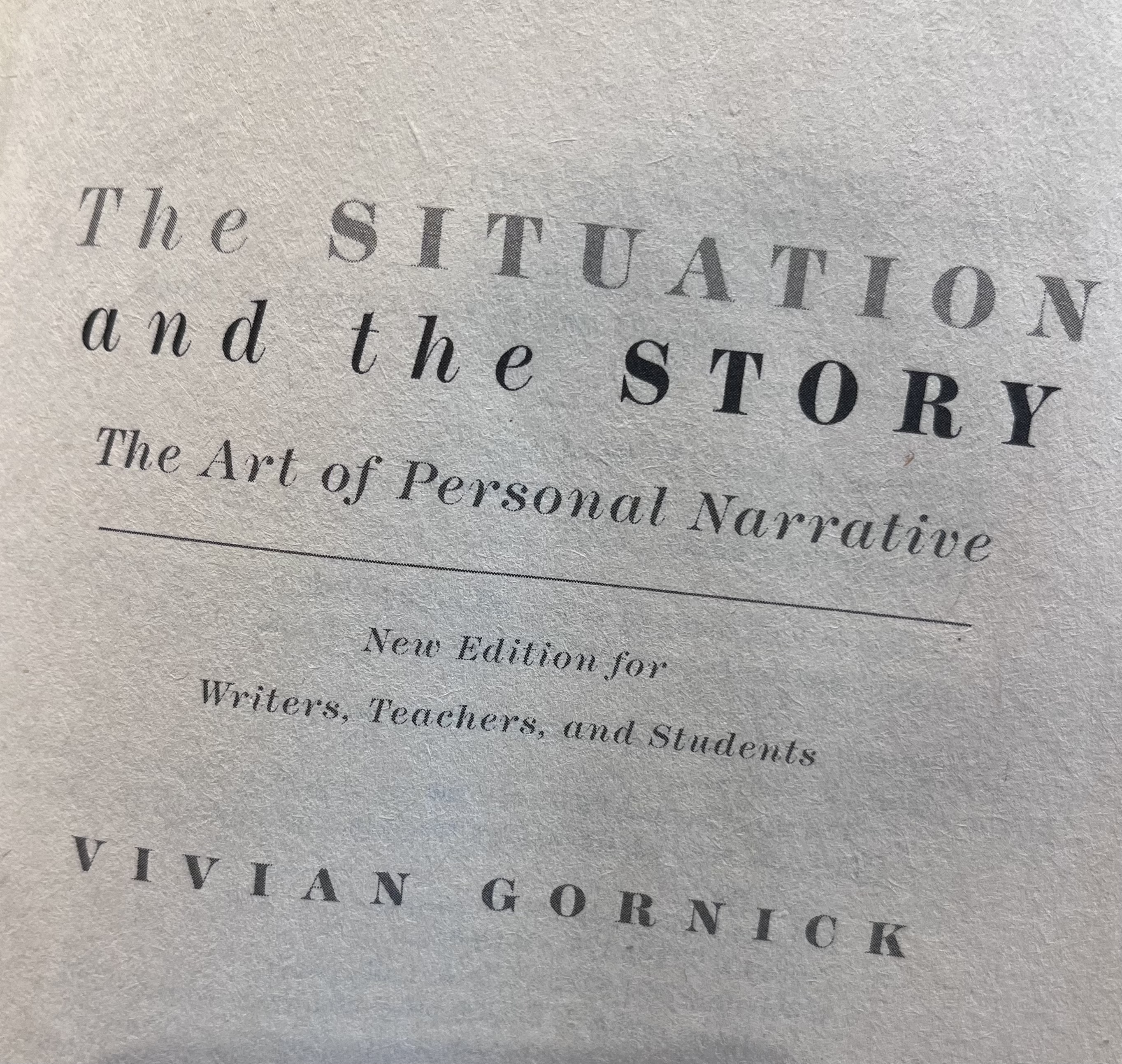
The Situation and the Story by Vivian Gornick
The crafting of a story feels like I have a Rubik’s Cube that I toss in the air, and while it is out of my hand, the small squares are turning and trying to align before returning to my hand. When I am not actively writing at the laptop, I am thinking of the writing. I am thinking of how my story relates to a bigger truth. I am thinking of how the story relates to things past and how it might relate to the future. The latter is more difficult than the former.
When writing about wines and spirits, the past informs the present. Wines do not exist in a vacuum. How we talk about wine and how we write about it is informed by historical context. How we tell those stories and how effectively we do it is not easy.
The shaping of a story starts as a thought. It feels like an unformed idea that, if I am honest, I am not likely to have been the first one to have thought it. But am I the first to go through with it? There are so many thoughts that go through my head in trying to make that Rubik’s Cube do what I want it to do. The truth is, I can only shape it. I can form what I already have into something. The cube has multiple combinations, and my story is only one.
Alicia Kennedy recommended the book, The Situation and the Story by Vivian Gornick*, during her highly instructive The Self-Edit Workshop. Kennedy uses her own work to illustrate the editing process when a writer does not have an editor. I learned quite a bit, and I highly recommend attending whenever she offers it.
This book is about how to write a story that serves the story and the reader. It dissects what makes a story worth reading or hearing. Whether we are writing about books or wine, how we tell the story matters.
*She won a Windham-Campbell Prize in 2021.
 Drinknowledge