
We’re watching a band play, though they’re more background than main event. My husband loves live music; I don’t always love it—or even like it. Still, certain songs manage to work their way into my head. I don’t usually listen with intention, but when the music is truly good, my brain takes notice.
The pub has a decent beer list displayed on one of those rotating TV screens that never stay up long enough to read. You have to wait for it to cycle through a few times before deciding. I settle on a Guinness Stout on tap.
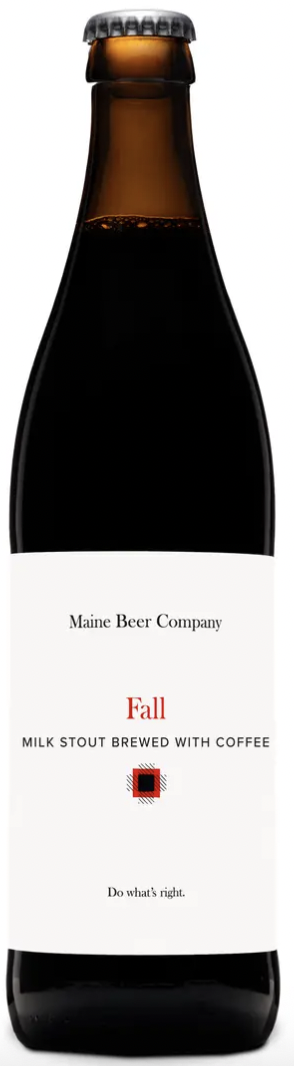
The music isn’t so loud that I can’t hear my husband, but it’s loud enough that the bartender has to lean in to ask for our order. He and I start talking about Maine Beer Company’s seasonal Fall release.
Whenever someone mentions Maine Beer Company, it’s usually to praise their Dinner, quickly followed by Lunch. But the bartender describes Fall as something like an Imperial without the high alcohol punch. I ask for a taste. On the nose, there’s a grassy coffee note. The sip follows with a bitter coffee edge that fades, then returns—a flavor yo-yo, but in a good way.
I don’t agree with him, though. It doesn’t remind me of an Imperial; it’s more like a cold porter. Too cold, really. The bitter coffee lingers, but I can’t help thinking the flavors would open up more if it weren’t so chilled. Some beers just shouldn’t be served this cold.
I return to my Guinness. A man takes the seat next to us, and conversation drifts between his food order, my husband getting up for a better view of the band, and me jotting down notes. That rhythm carries through the night until, eventually, the man and I are deep in conversation about music. He asks me about Bad Bunny.
I have a lot to say—not so much about Bad Bunny himself, but about what he does on the album DTMF. I tell him I’m working on an essay about my fascination with it, as well as the questions it stirs in me about being Puerto Rican in the diaspora, here in Hartford.
 Drinknowledge