Can wine writers learn something from criticism in other disciplines?
The constant pursuit of knowledge is not an endeavor that concerns itself only with the pursuit. Knowledge does not rest in silos once discovered. It sits at the center of a web and spreads out, connected by thin threads in every direction.
When I read or watch something, my mind is always connecting it to something else.
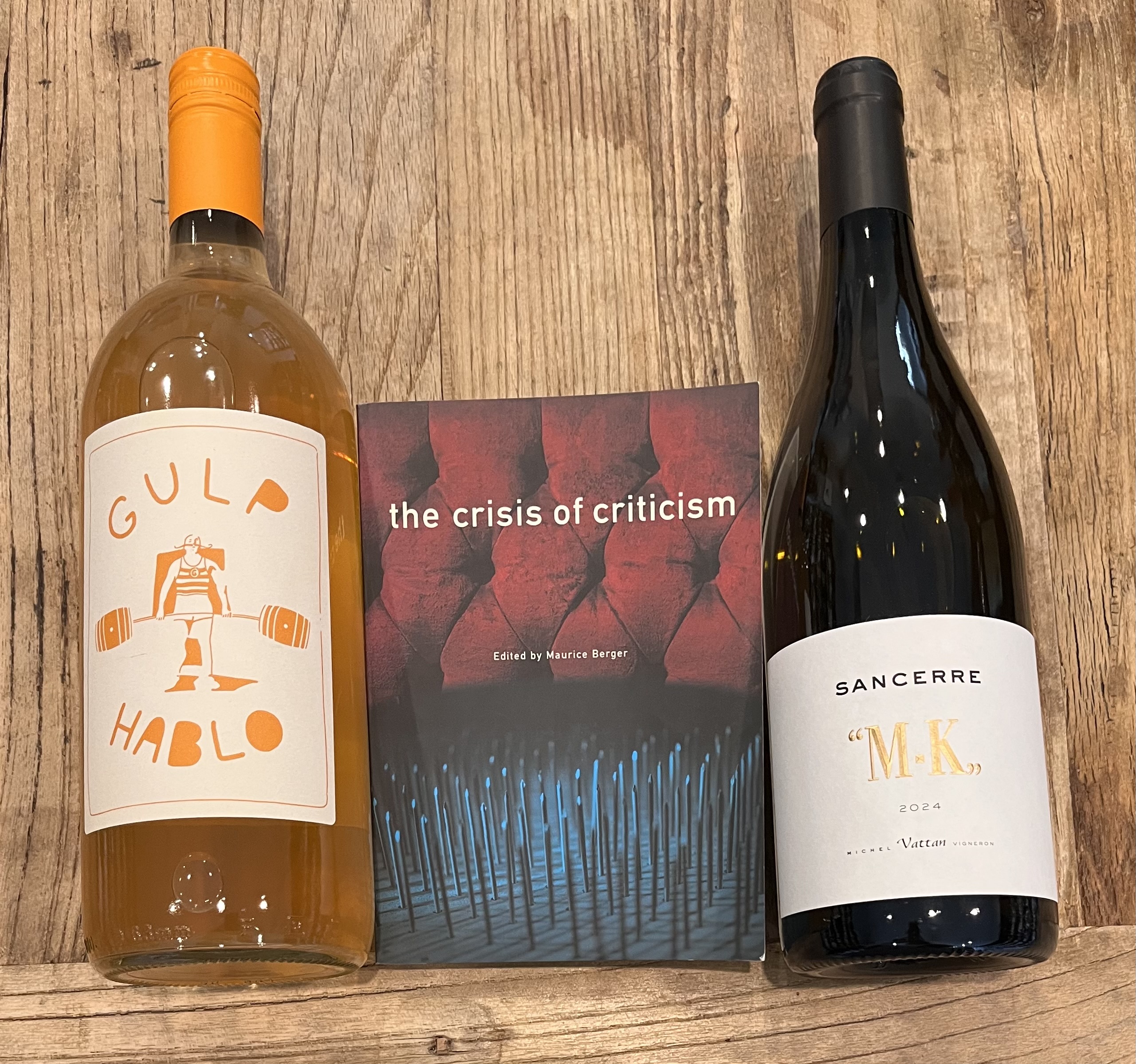
The small tome The Crisis of Criticism, edited by Maurice Berger, addresses the question of the critic. In the wine world, some people call themselves critics, others journalists, and others don’t call themselves anything. Some just say they “write about wine.” Do we need to distinguish between the types of wine writing available? Much discussion has been had (and still happens) about what the exact role of a wine writer is.
The back-cover blurb of this book states that it “is a collection of brilliantly argued, provocative essays that address the problematic nature of the critic’s authority and responsibilities.” It asks, “Do critics grant cultural permission, or is their work merely descriptive? Is there such a thing as critical activism? How can critics bridge the gap between a sometimes hermetic art community and the public? Are critics consumer advocates, sycophants, or artists in their own right?”
These are all questions that can be asked of wine writers and that we should ask ourselves as we write about wine, whether tasting a wine and giving an opinion or writing a history of natural wine.
The contributors to the book include Joyce Carol Oates and bell hooks—just to name two of the most well-known names. The book covers the spectrum from art to music to film to dance.
There are going to be references in the book that are beyond what we think about every day and that belong more in the academic realm, but that is not to say that many of the things in this book don’t apply to writing about wine. Do I know exactly what the writer means by “There is no question that post-structuralist, psychoanalytical, feminist, and neo-Marxist theories have inspired new and radical forms of critical practice…”? The answer is no. But a few sentences later, I do understand when he writes the following: “Given these and other problems, how can serious criticism remain relevant or even desirable in a country where soundbites pass for erudite commentary, attention spans wane, and passion for the written word is becoming increasingly rare? Criticism must strive to be as resonant as the art it interprets, but without being abstruse or condescending.”
Is wine an art? Is it produce? Is it craft? Why does it need a critic? If art, why not in museums? If produce, why isn’t it treated like other farmed items? Is it its transformation from fruit to liquid that leaves it out of the farming discussion? If craft, then who is crafting it—the grower? The winemaker?
As I think more about wine and writing about it, the way I write about it becomes important. This book certainly helps you spin another thread in another direction while hopefully keeping your other threads tethered.
Readily available on eBay.


Leave a comment